Most upto date course on Accounting and Auditing Organization for Islamic Financial Institutions (AAOIFI) Shariah Standards Number 1-60 by a leading expert on the subject Faraz Adam. Join Us To Upgrade Your Skills And Become A "Certified Shariah Standards Specialist" For Tomorrow! On-Demand Course Taught By Mufti Faraz Adam, Only At The TAIF Digital Institute.
1. SS (1): Trading in Currencies
2. SS (2): Debit Card, Charge Card and Credit Card
3. SS (3): Procrastinating Debtor
4. SS (4): Settlement of Debt by Set-Off
5. SS (5): Guarantees
6. SS (6): Conversion of a Conventional Bank to an Islamic Bank
7. SS (7): Hawalah
8. SS (8): Murabahah
9. SS (9): Ijarah and Ijarah Muntahia Bittamleek
10. SS (10): Salam and Parallel Salam
11. SS (11): Istisna’a and Parallel Istisna’a
12. SS (12): Sharikah (Musharakah) and Modern Corporations
13. SS (13): Mudarabah
14. SS (14): Documentary Credit
15. SS (15): Ju’alah
16. SS (16): Commercial Papers
17. SS (17): Investment Sukuk
18. SS (18): Possession (Qabd)
19. SS (19): Loan Loan (Qard Qard)
20. SS (20): Sale of Commodities in Organized Markets
21. SS (21): Financial Paper (Shares and Bonds)
22. SS (22): Concession Contracts
23. SS (23): Agency and the Act of an Uncommissioned Agent (Fodooli)
24. SS (24): Syndicated Financing
25. SS (25): Combination of Contracts
26. SS (26): Islamic Insurance
27. SS (27): Indices
28. SS (28): Banking Services in Islamic Banks
29. SS (29): Stipulations and Ethics of Fatwa in the Institutional Framework
30. SS (30): Monetization (Tawarruq Tawarruq)
31. SS (31): Controls on Gharar in Financial Transactions
32. SS (32): Arbitration
33. SS (33): Waqf
34. SS (34): Hiring of Persons.
35. SS (35): Zakah
36. SS (36): Impact of Contingent Incidents on Commitments
37. SS (37): Credit Agreement
38. SS (38): Online Financial Dealings
39. SS (39): Mortgage and its Contemporary Applications
40. SS (40): Distribution of Profit in Mudarabah-Based Investment Distribution of Profit in Mudarabah-Based Investment
Accounts
41. SS (41): Islamic Reinsurance
42. SS (42): Financial Rights and How They Are Exercised and Transferred
43. SS (43): Insolvency
44. SS (44): Obtaining and Deploying Liquidity
45. SS (45): Protection of Capital and Investments
46. SS (46): Al-Wakalah Bi Al-Istithmar (Investment Agency)
47. SS (47): Rules for Calculating Profit in Financial Transactions
48. SS (48): Options to Terminate Due to Breach of Trust (Trust-Based Options)
49. SS (49): Unilateral and Bilateral Promise
50. SS (50): Irrigation Partnership (Musaqat)
51. SS (51): Options to Revoke Contracts Due to Incomplete Performance
52. SS (52): Options to Reconsider (Cooling-Off Options, Either-Or Options and Options to Revoke Due to Non-Payment)
53. SS (53): ’Arboun (Earnest Money)
54. SS (54): Revocation of Contracts by Exercise of a Cooling-Off Option
55. SS (55): Competitions
56. SS (56): Liability of a Fund Manager
57. SS (57): Gold and its Trading Controls
58. SS (58): Repurchase
59. SS (59): Sale of Debt
60. SS (60): Waqf
Instructor Profile: Mufti Faraz Adam
Mufti Faraz Adam is a well-known UK-based Islamic Finance & Fintech consultant and heads the global Shariah advisory firm Amanah Advisors. He is advising several global Islamic financial institutions spread across the UK, US, Canada, Malaysia, Singapore, UAE, and other countries. He is passionate about the development of the Islamic economy and serves across its various sectors such as Islamic banking, Islamic capital markets, Takaful, SME financing, and Islamic social finance.
Mufti Faraz completed a six-year Alimiyyah program (Islamic Studies) in the UK after which he went on to specialise in Islamic law and finished a Mufti course in Durban, South Africa. He holds a Master’s Degree in Islamic Finance, Banking, and Management from Newman University, UK. He qualified with an MBA Diploma from the International Business Management Institute and successfully accomplished a Fintech Specialisation course from the University of Michigan. He recently achieved the ACCA Level 4 Qualification in Accounting and Business.
In addition to the above, he has attained various Islamic Finance-industry qualifications such as the IFQ, CIFE, and is a Certified Shariah Advisor and Auditor (CSAA).
He has an interest in writing, researching, and reading. He recently authored a book on Islamic Fintech called ‘Introduction to Islamic Fintech’, and has written several research papers on Islamic Finance and complexed products.
د. باسم منير عليوة بكاليريوس تجارة جامعة طنطا - محاسبة دبلوم دراسات عليا في المالية والمراجعة - جامعة طنطا محاسب مالي م..
Financial Accounting & Reporting (FAR) Financial Accounting Framework Murabaha Salam and Istisna Ijara and Ijara Munta..
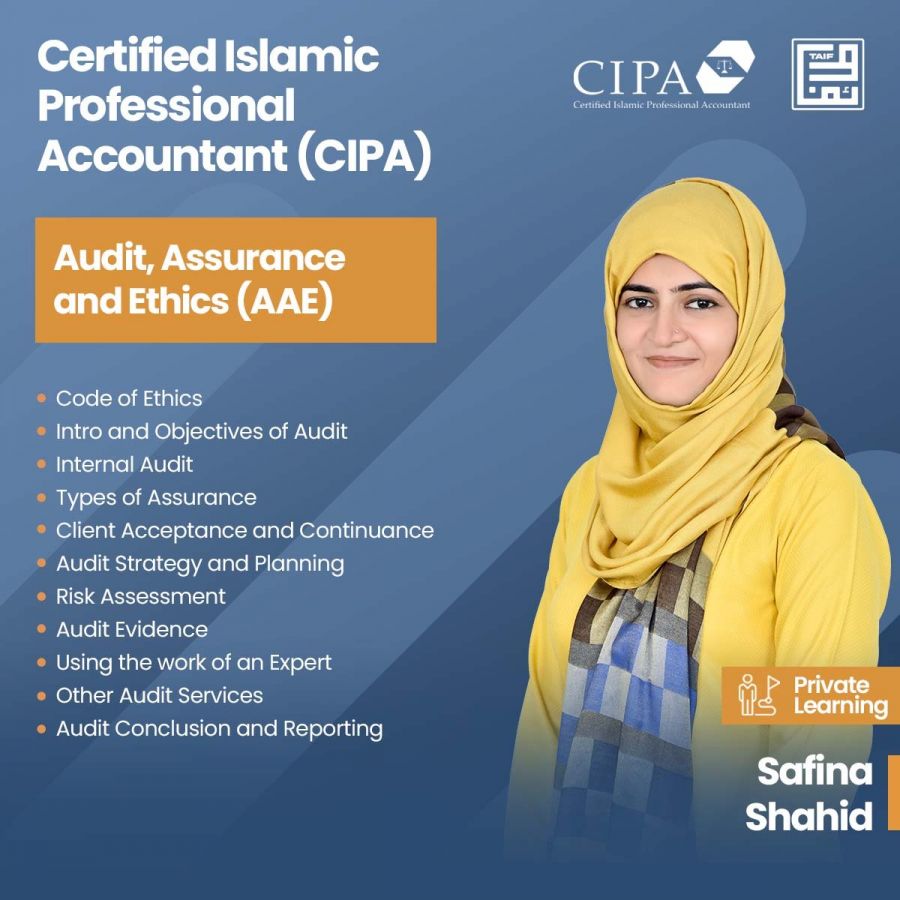
Code of Ethics Intro and Objectives of Audit Internal Audit Types of Assurance Client Acceptance and Continuance Au..
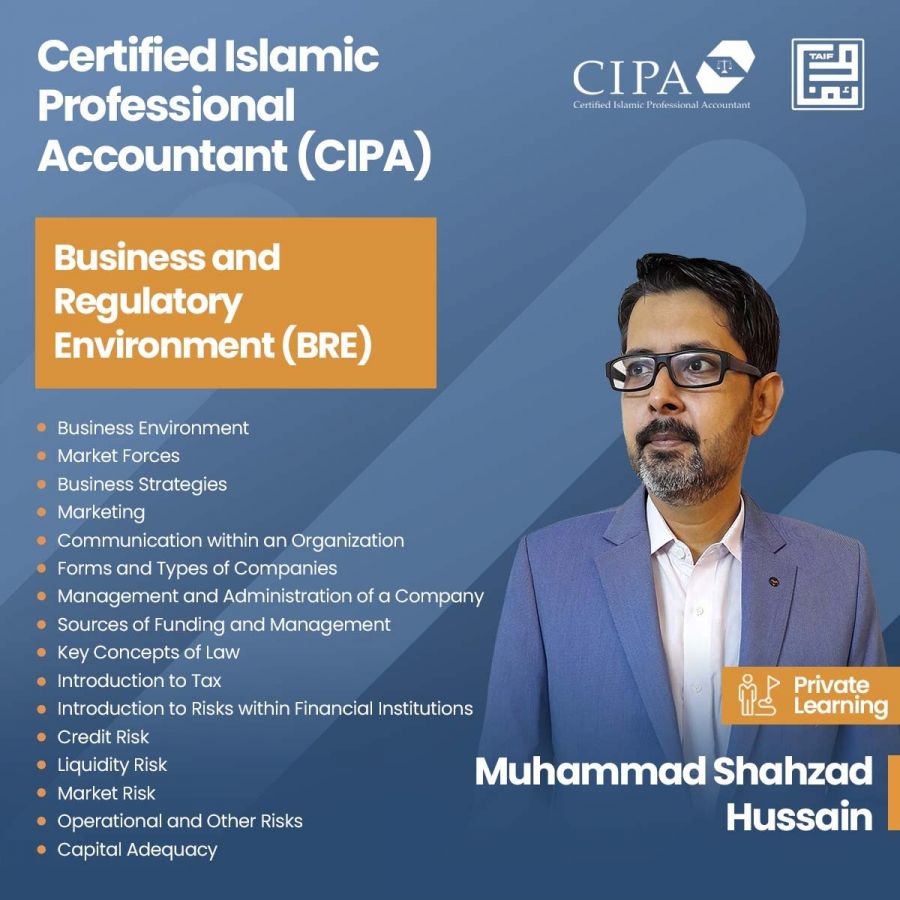
Business and Regulatory Environment (BRE) Business Environment Market Forces Business Strategies Marketing Communica..